PLANES
Before revealing the performance in depth, the layers that comprise each plane and sub-plane are displayed. Evaluation of the room response is then conducted through the interpretation of measurements.
Assessment of the acoustics takes place in this section. When we examine how rooms colour the sound, we look at the time domain behavior. In Classical Acoustics the concept has been known as reverberation time (RT). In small rooms, we are primarily concerned about the low-frequency counterpart; modal decay time (MDT).
Modes are known as primary factor of perceived coloration in rooms for listening. Uncolored soundstage can only be achieved when the resonances are sufficiently damped. The degree of damping for each frequency has been determined as a function of MDT (Fazenda et al., 2015).
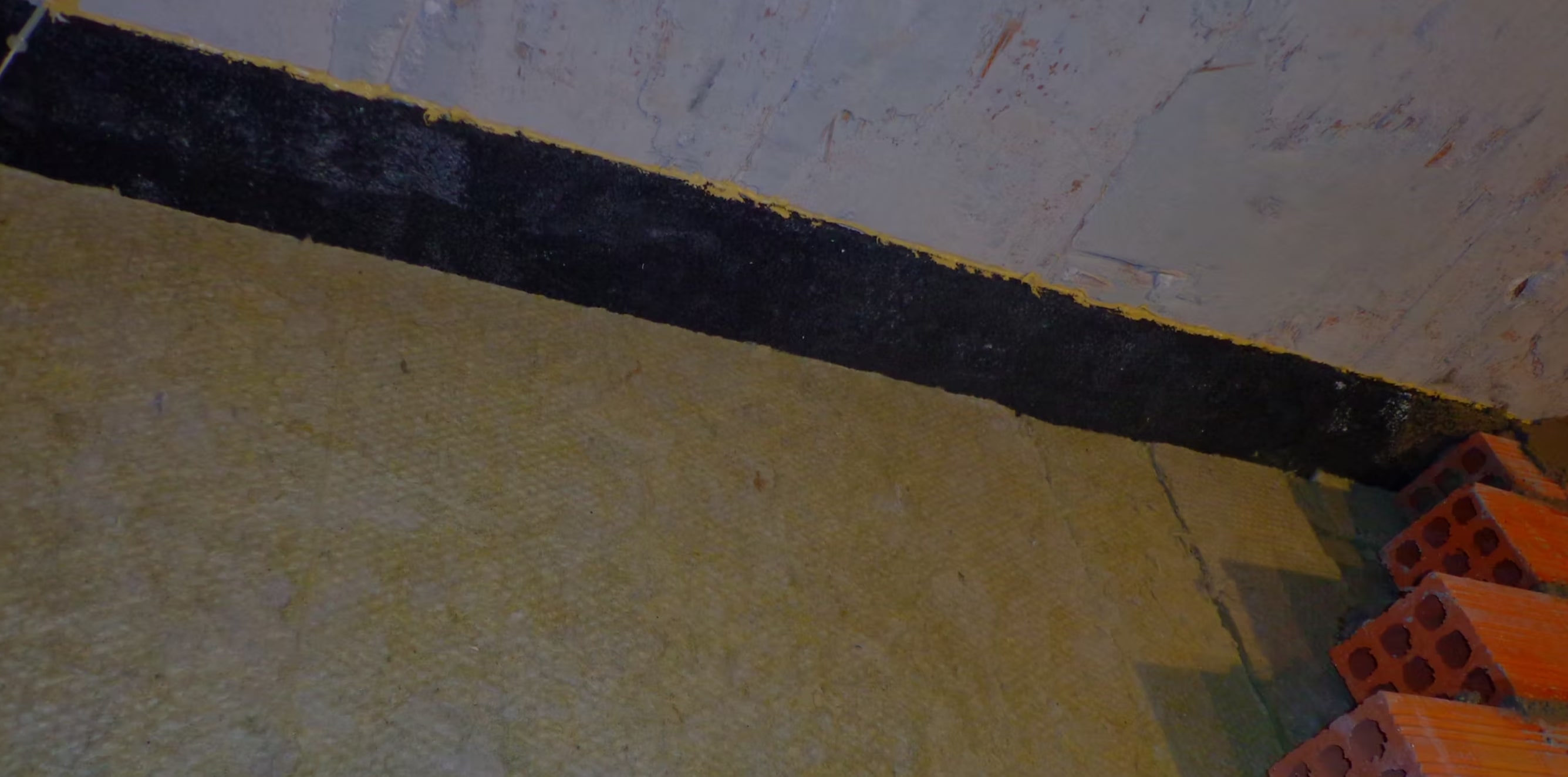
Before revealing the performance in depth, the layers that comprise each plane and sub-plane are displayed. Evaluation of the room response is then conducted through the interpretation of measurements.
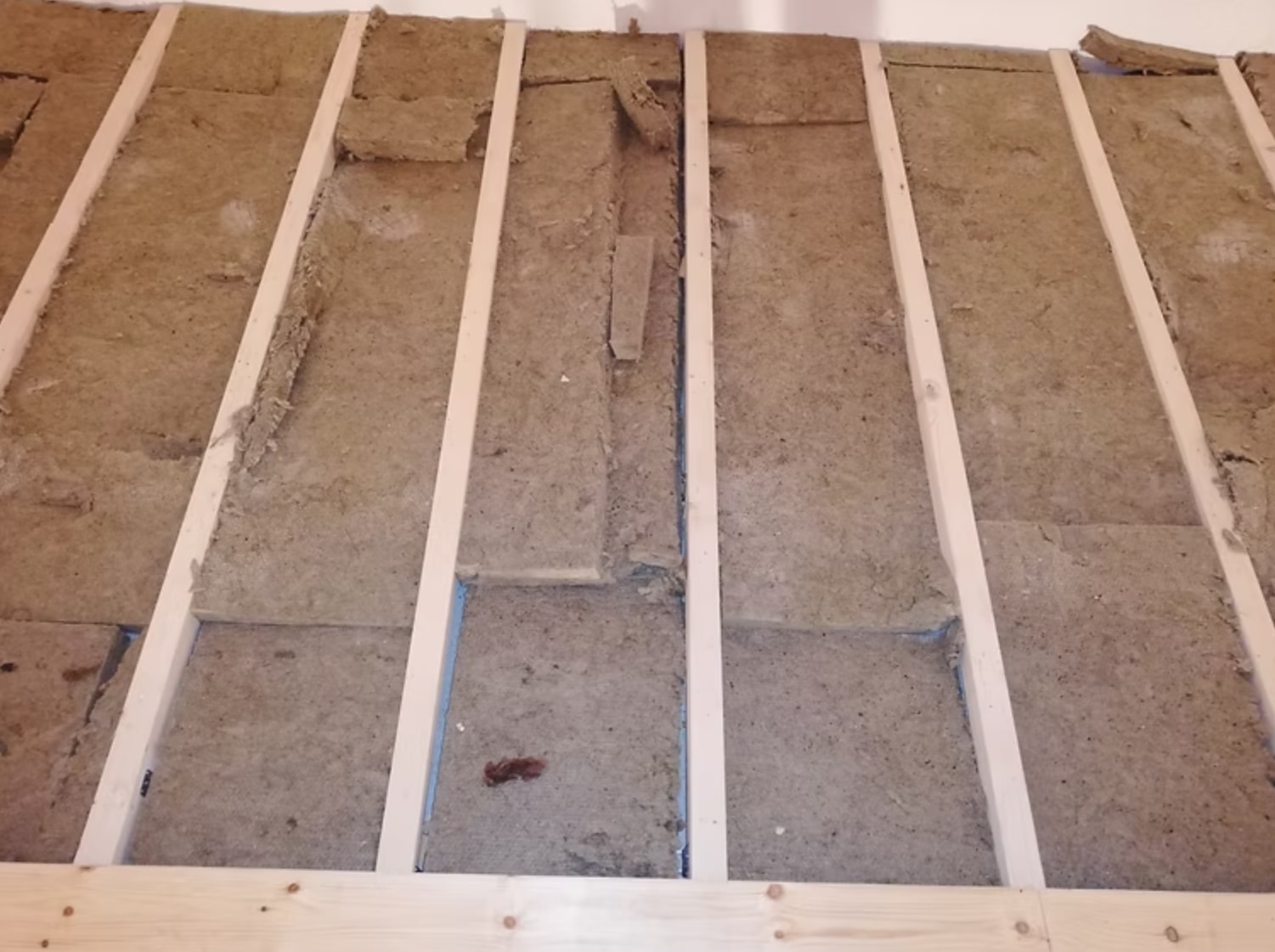
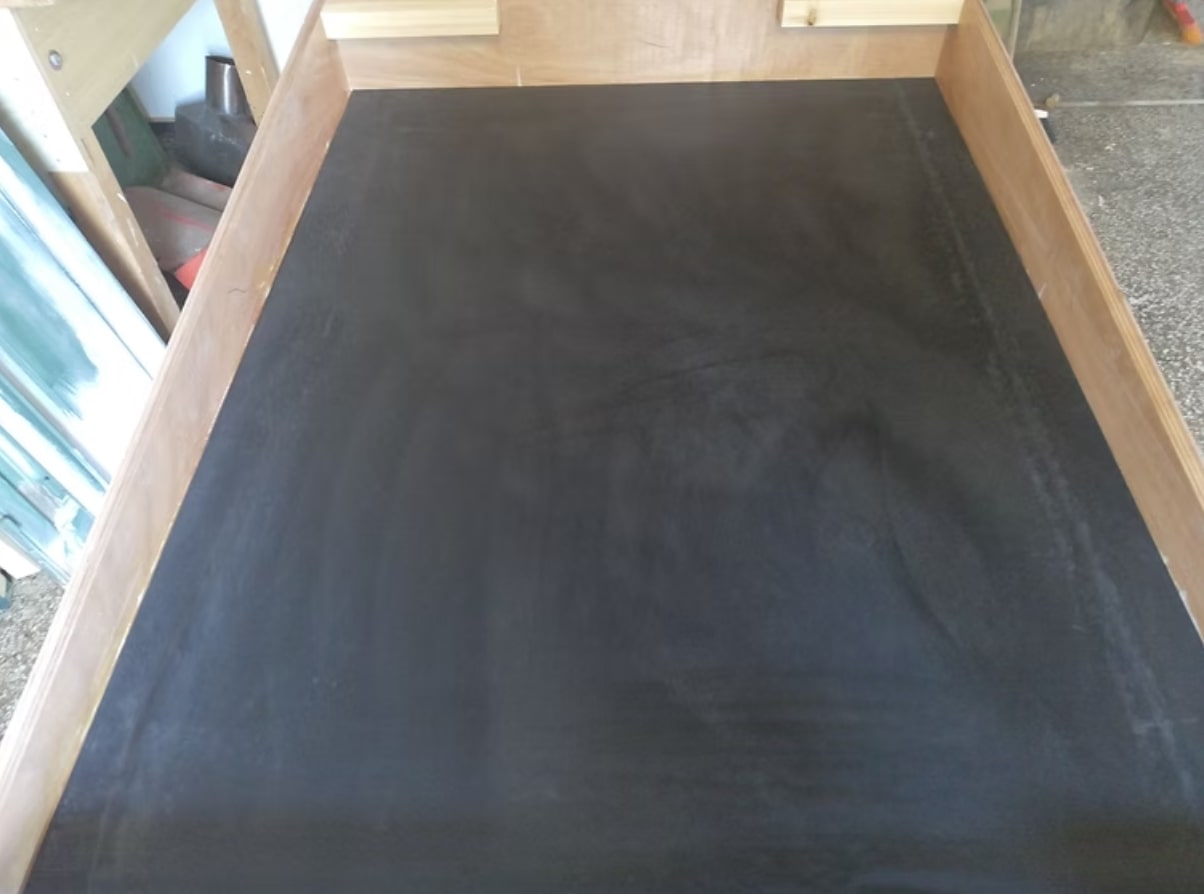
A wooden floor is separated from the main slab. In between, the 10cm gap is filled with rockwool.
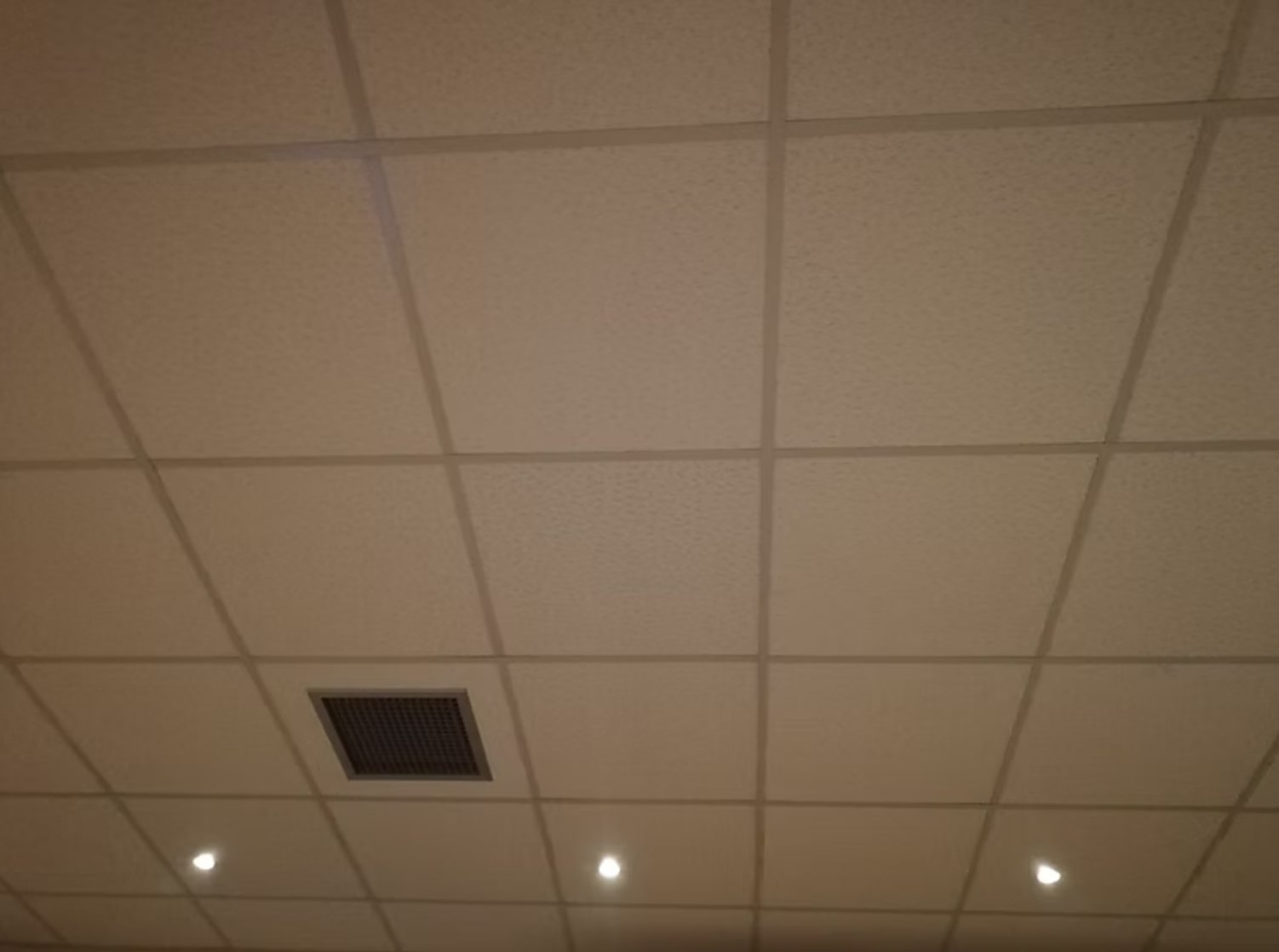
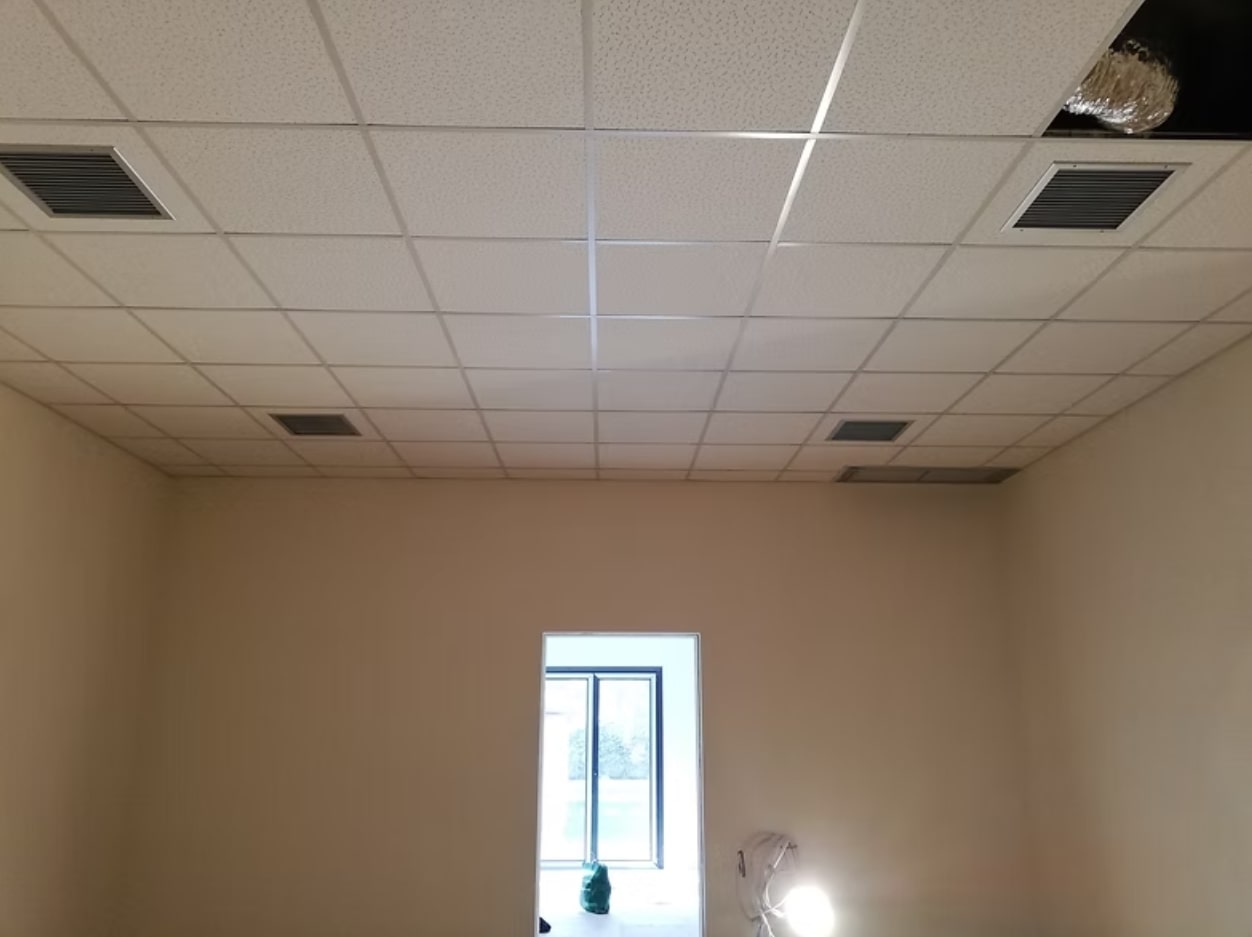
The ceiling essentially is a triple-layer construction (slab-drywall-tiles). Right above the visible tile ceiling, HVAC tubes take place.
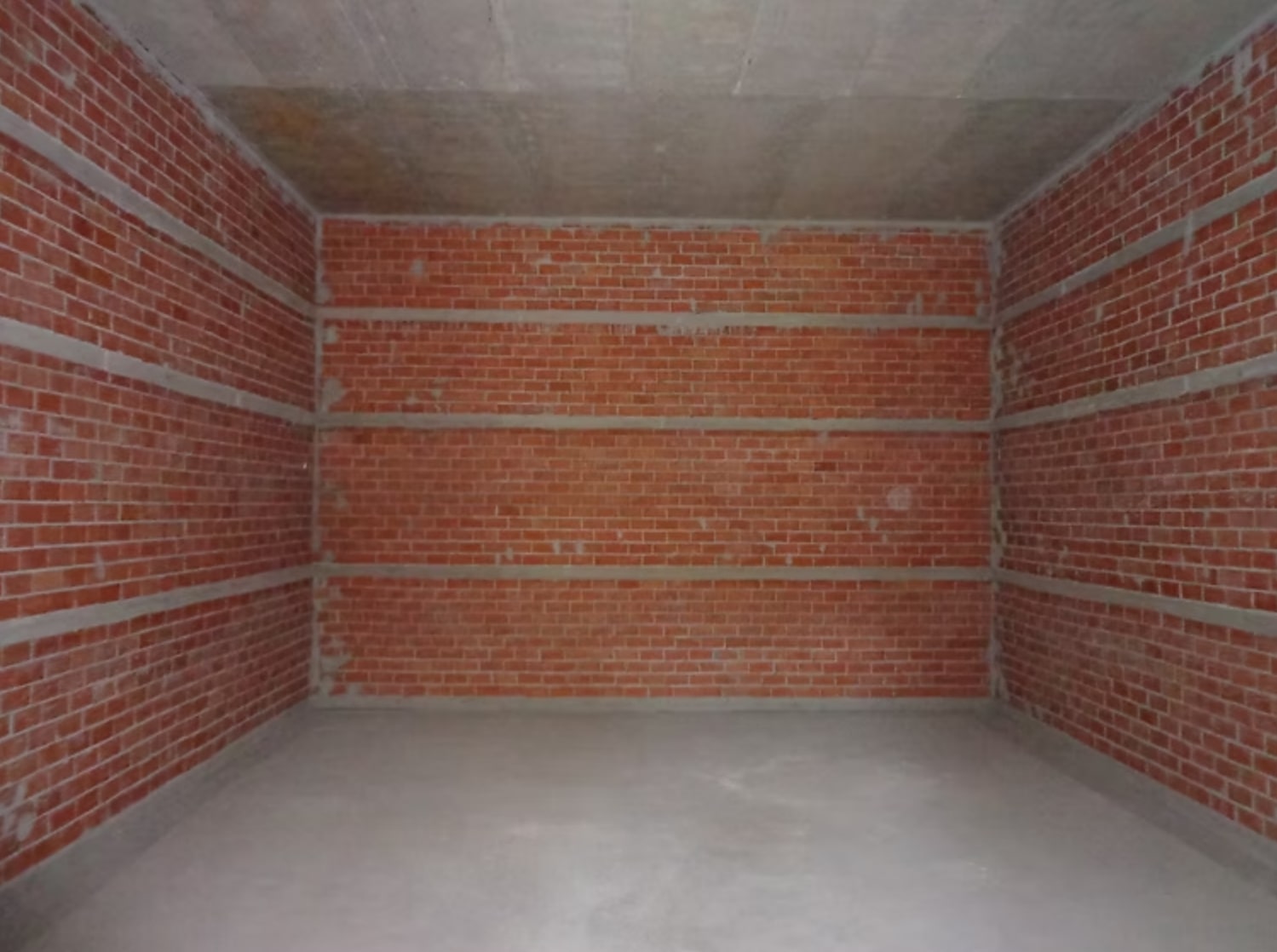
Before the floating floor/ceiling took place, floating brick walls were assembled. At the certain point the slab to slab distance was 4m.
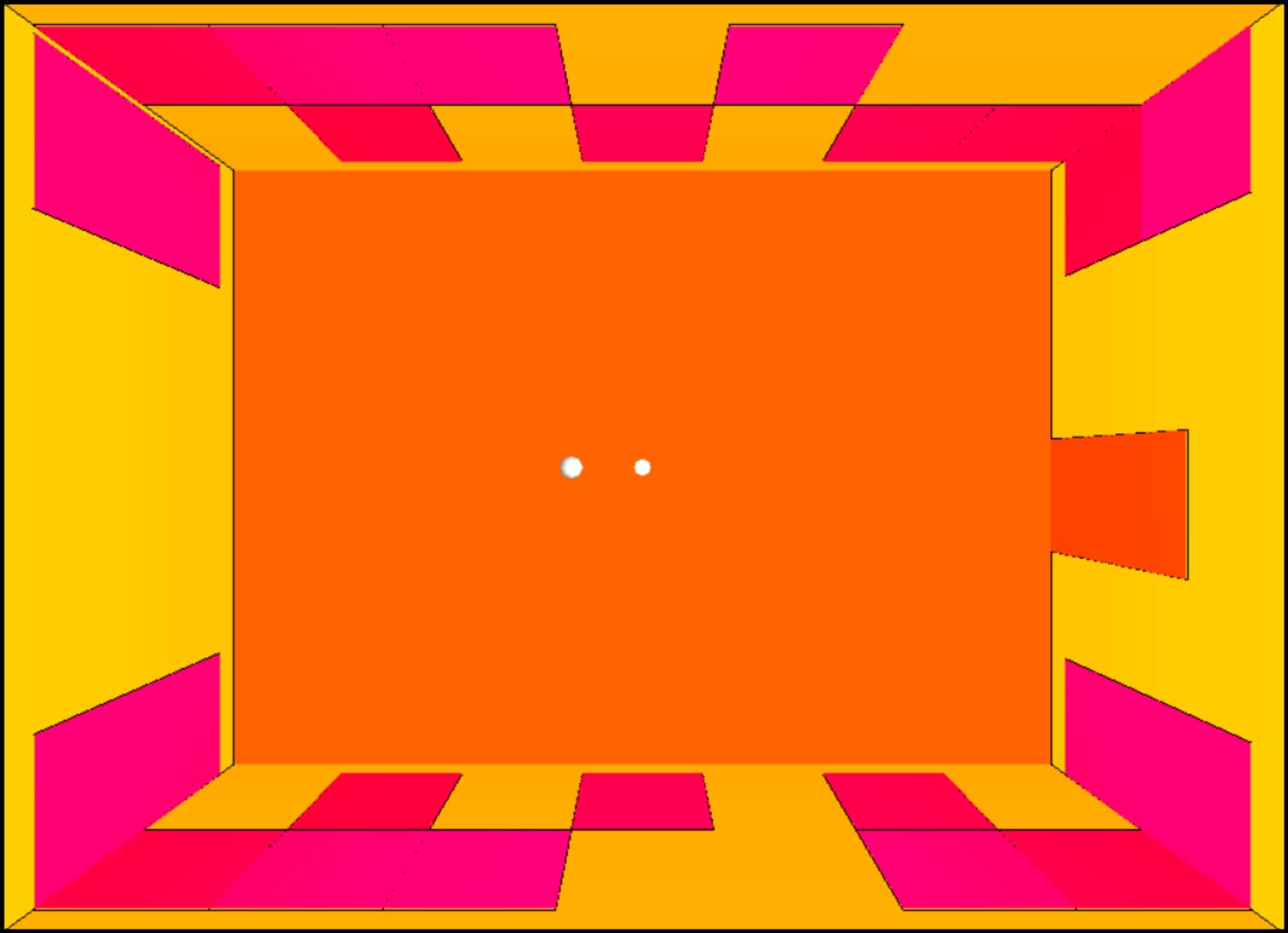
Panels that occupy 1.3m2 are mounted on the vertical walls. The panels are divided into: 1) membrane of two different thicknesses and 2) porous 5cm thick with cloth.
Critical Studio boasts significant low-frequency damping thanks to uniformly distributed custom-made membrane absorbers (20cm and 10cm thick). The enclosed gaps are filled with rockwool. The masses of the front surfaces are increased with viscous material.
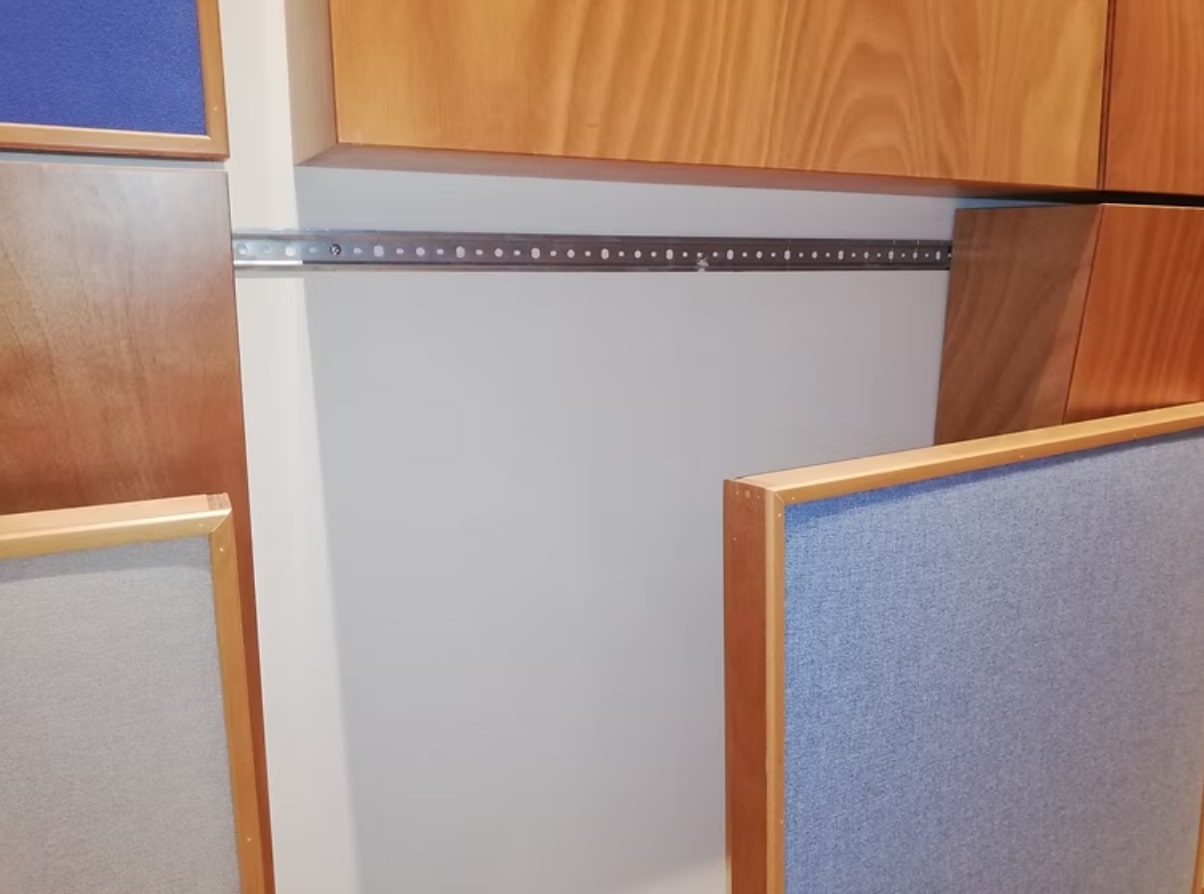
The porous absorbers can quickly be hung/unhung by a single person. When mounted, the sound field is suitable for monitoring. When removed, the place is transformed into live room.
The effect of the room is depicted below in regards to MDT.
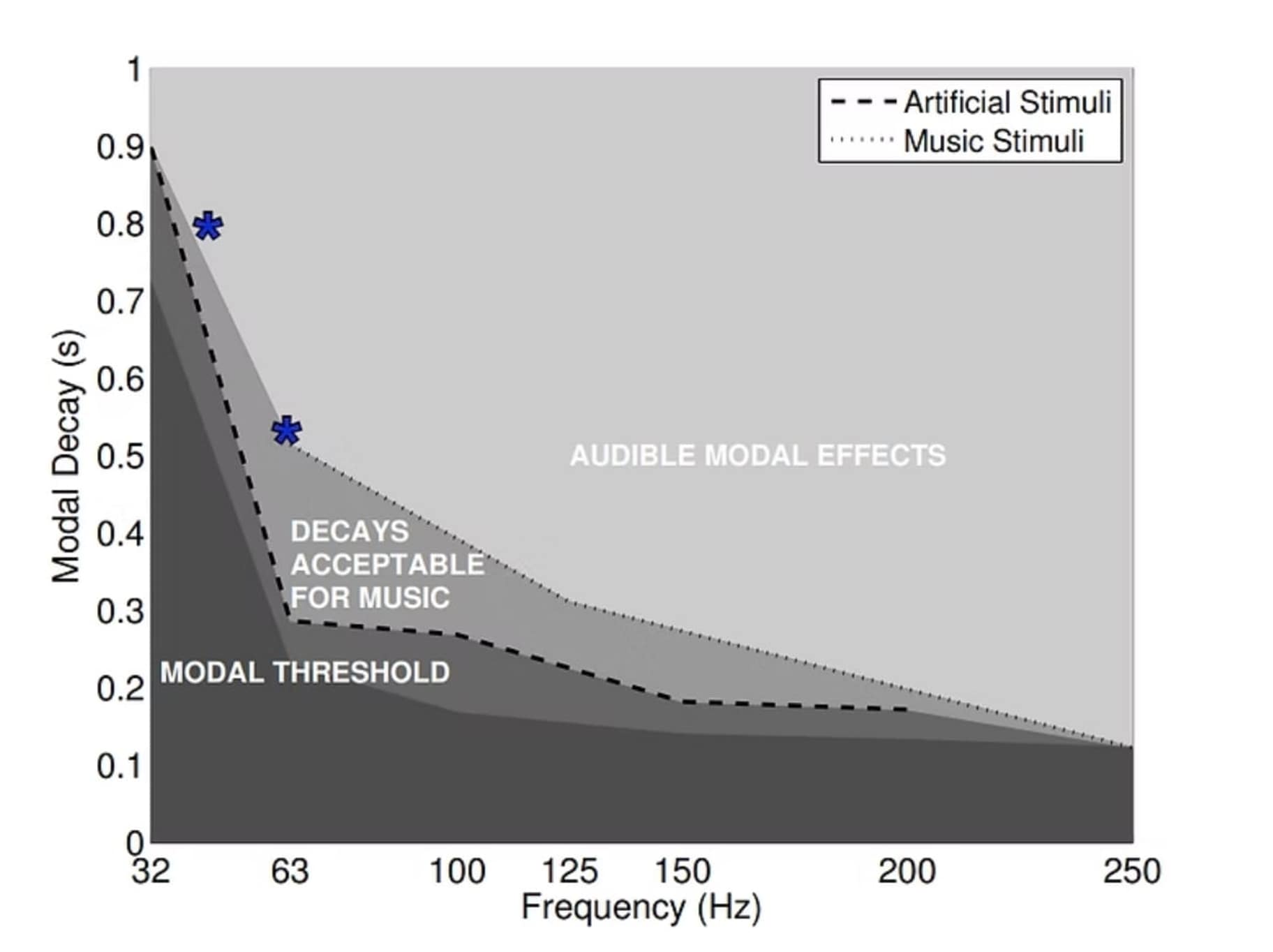
When the absorbers are absent from the vertical walls, the measurements reveal decays perceived as coloration.
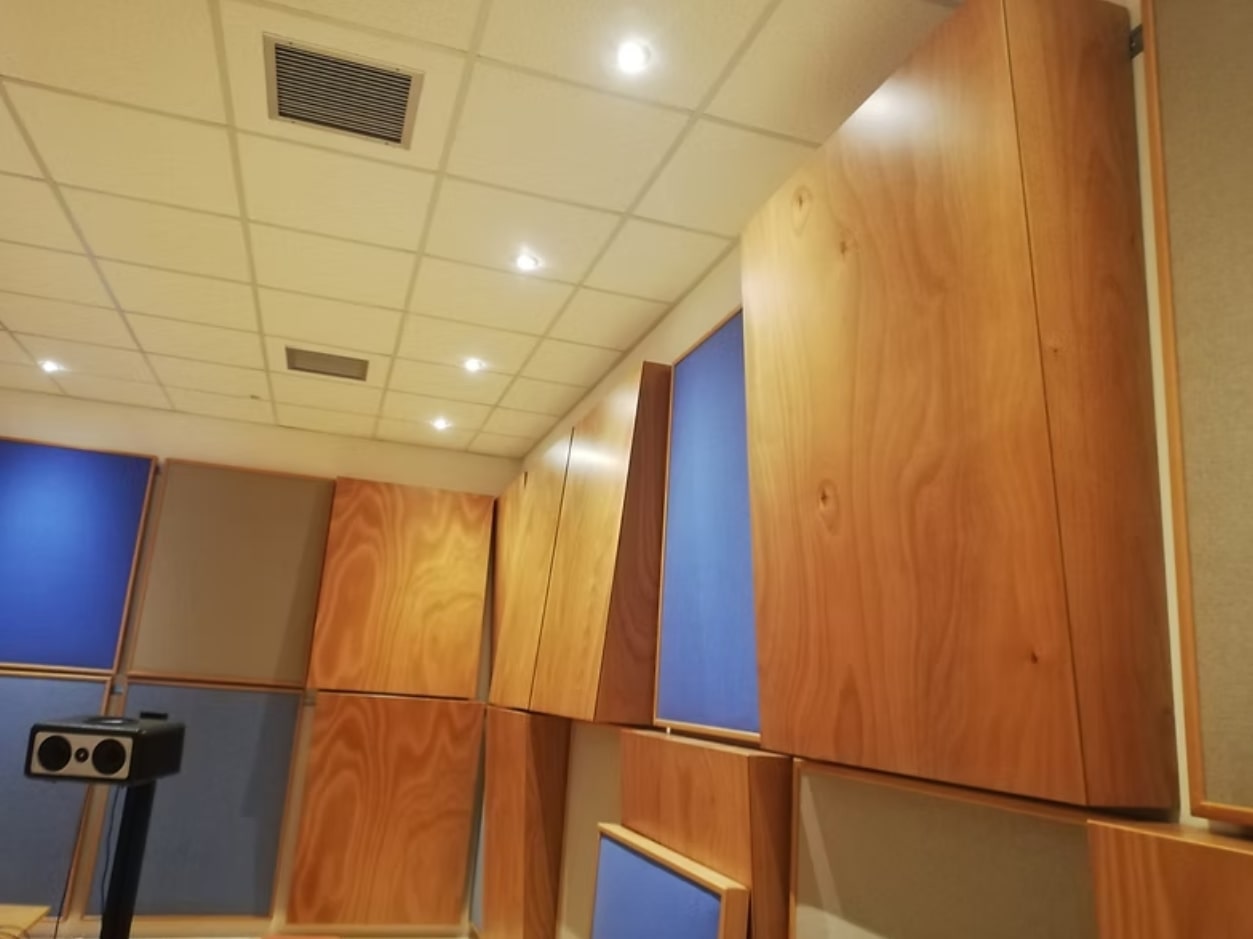
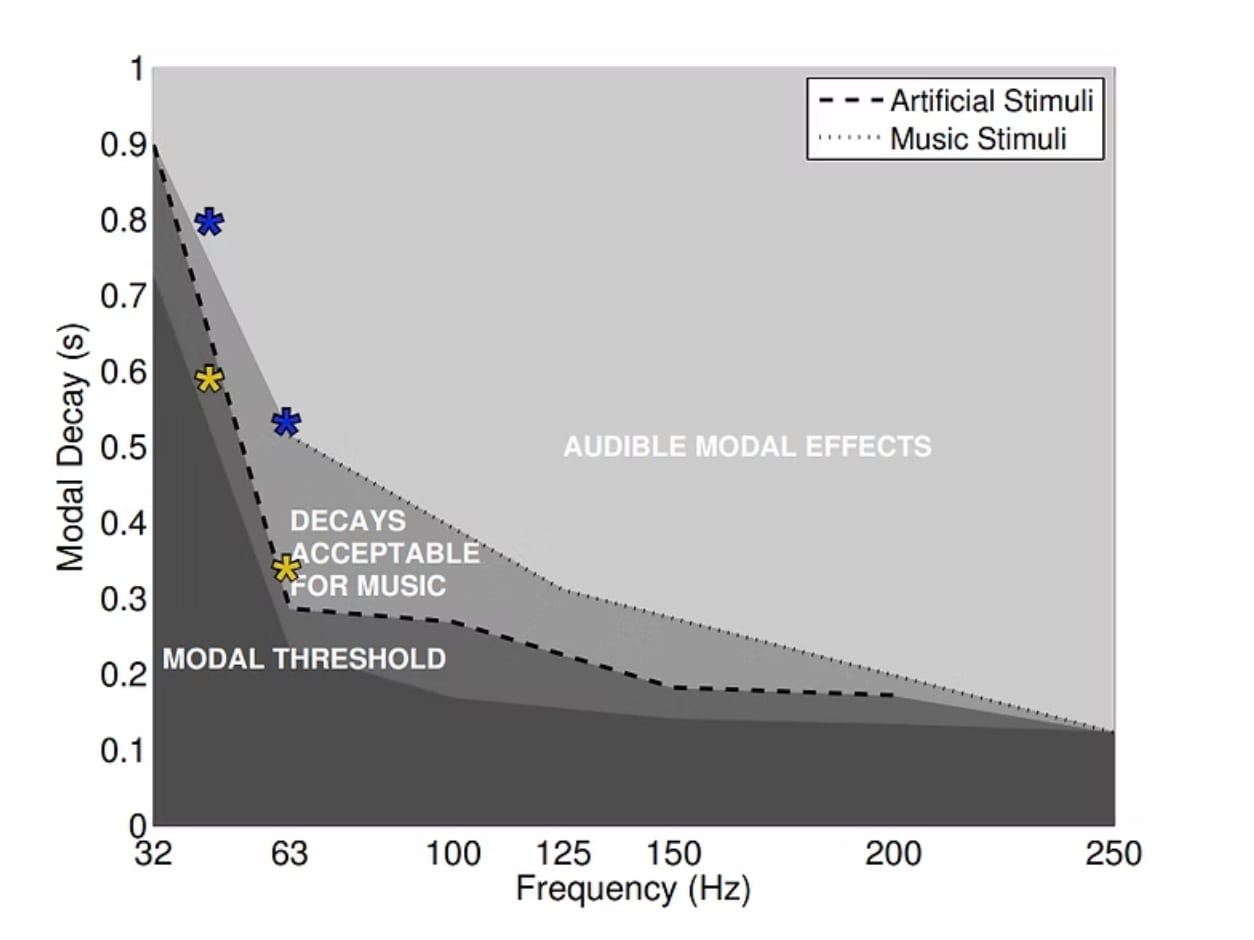
With the absorbers in place, inaudible decays for musical signals are realized.
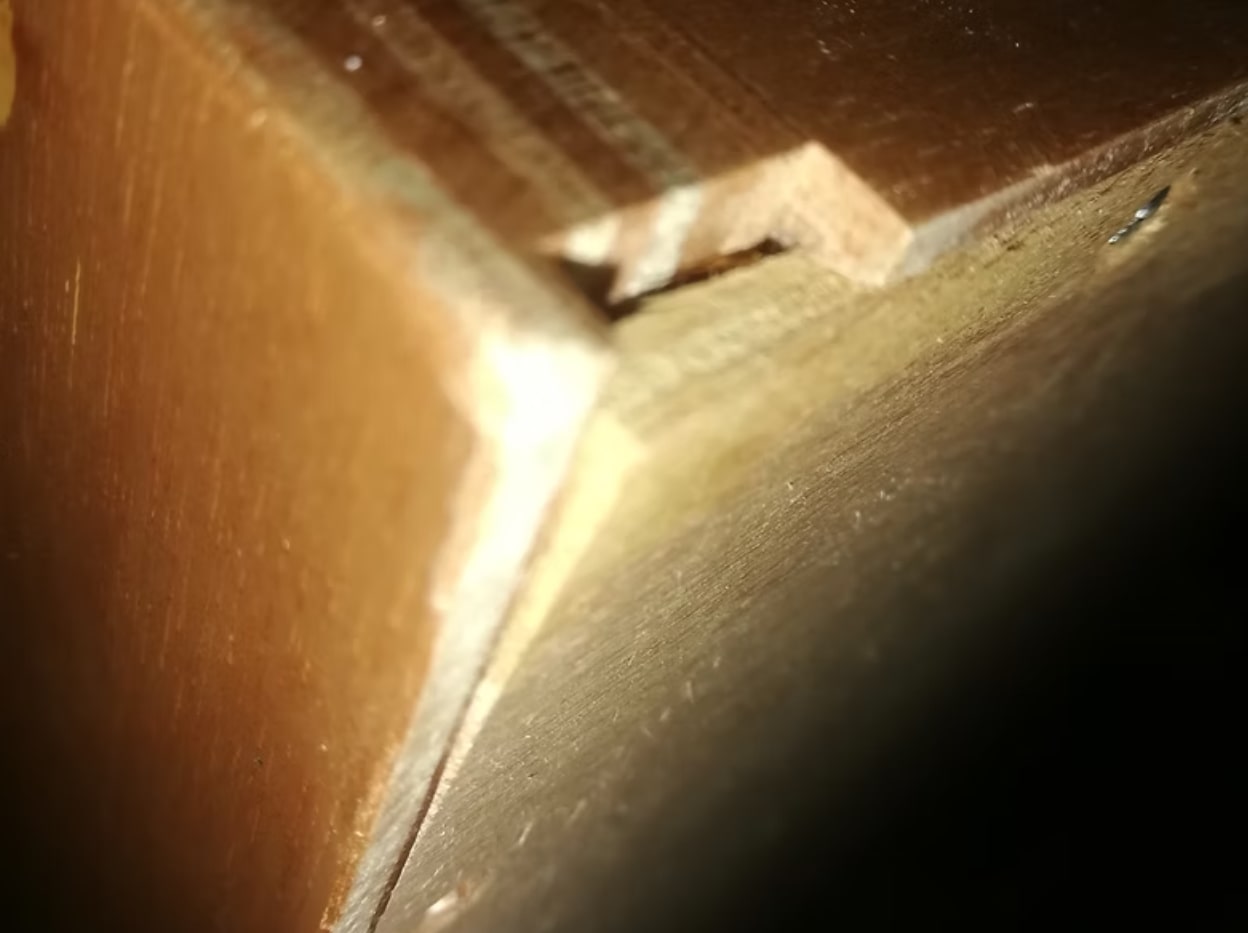
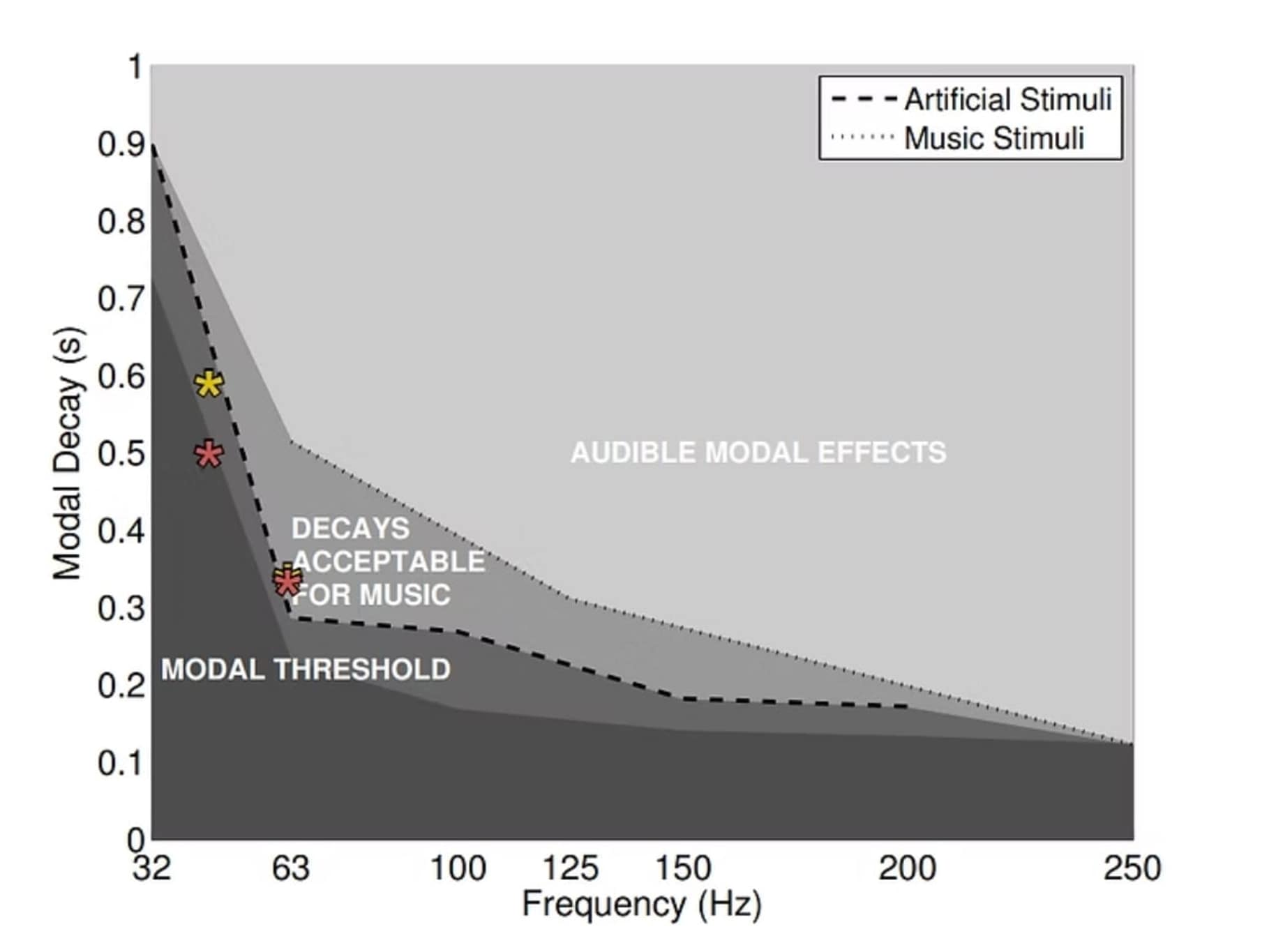
Some kind of discontinuity was detected on the backing of the thicker membrane absorbers. Acrylic paste was added to make them airtight, lowering further the decay times. The (2, 0, 0) mode at 44Hz achieves decay which is severely undetectable.
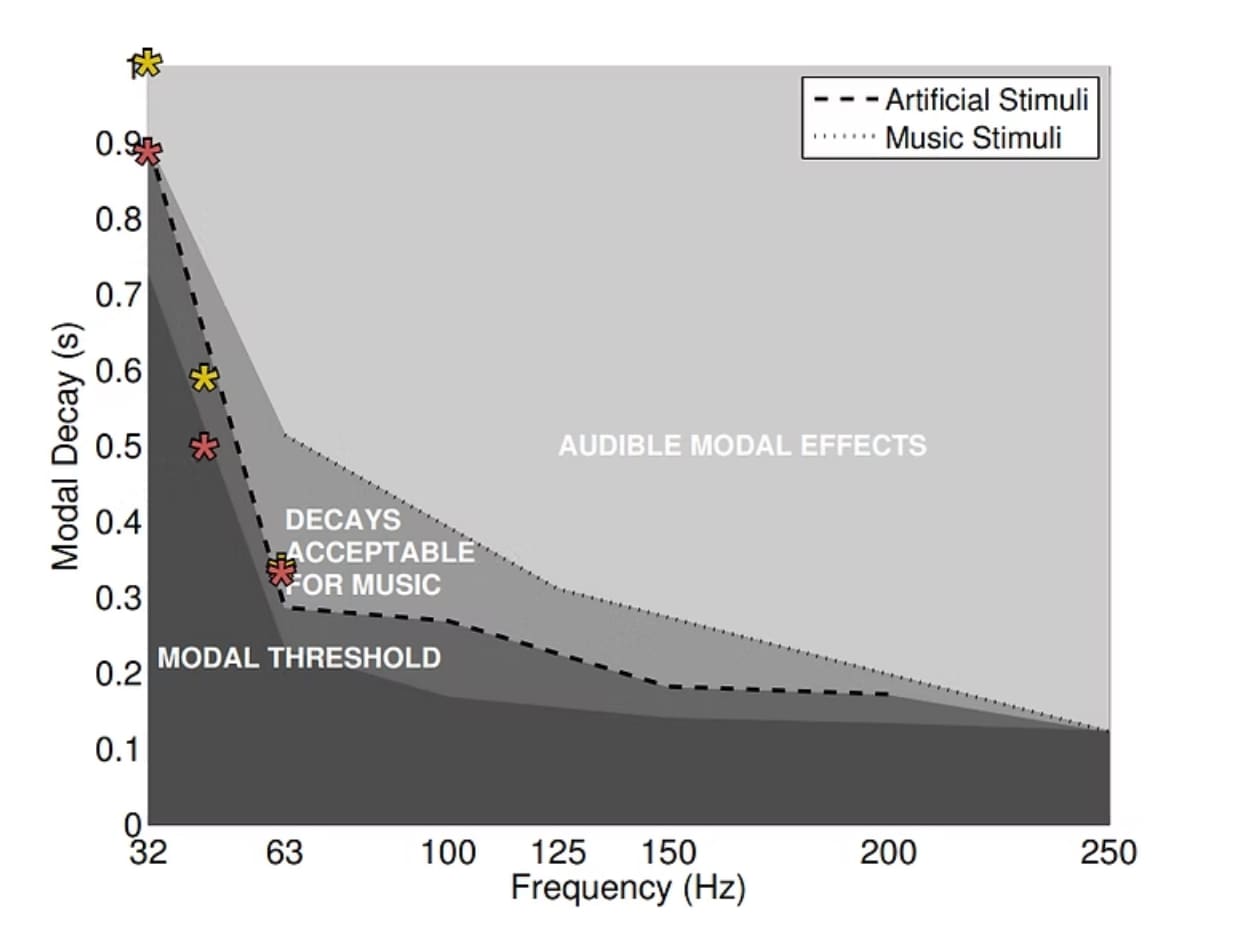
The latter move also improves the response even lower. The (0, 1, 0) mode at 29Hz achieves decay that indicates absence of coloration.